
Last Verified: May 2026 | By SimOwner.net.pk Editorial Team — documenting Pakistan’s SIM fraud patterns since 2015
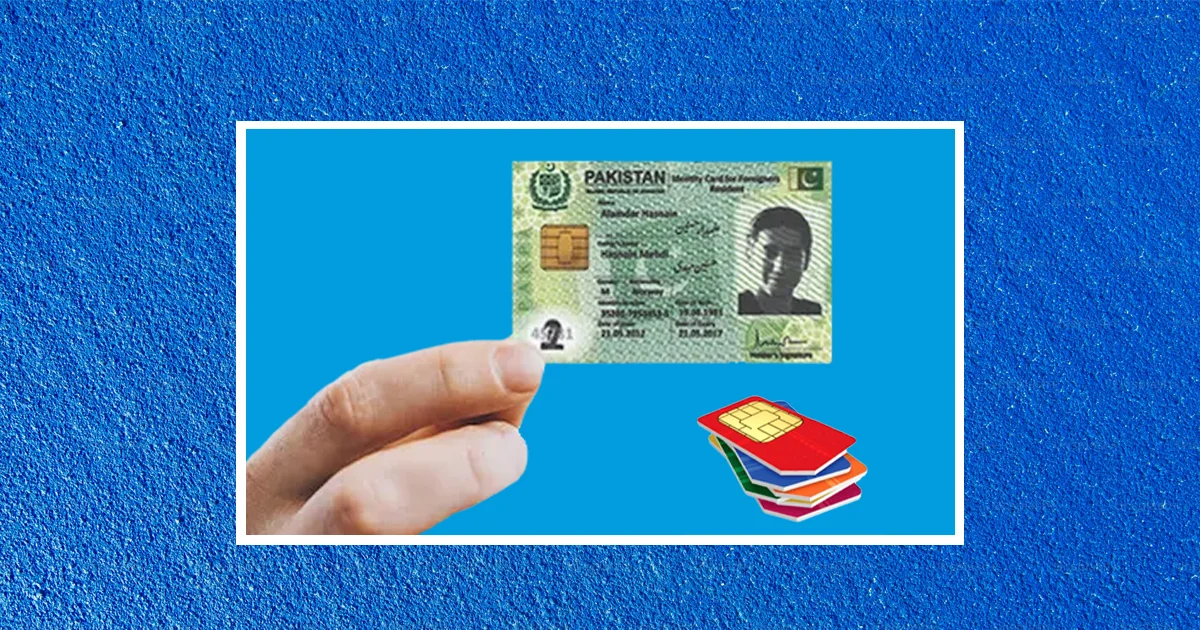
In the grief of losing a family member, almost no one thinks about their CNIC. But Pakistan’s SIM fraud networks do — often within 24 to 72 hours of a death.
A deceased person’s CNIC remains active in Pakistan’s systems until formally cancelled through NADRA. In that window — which can stretch weeks or months if the family does not act — criminals with access to the deceased’s CNIC number can register new SIMs, open mobile wallets, take microloan applications, and commit fraud that comes back to haunt the surviving family.
This guide explains exactly what happens to a deceased person’s CNIC, what you must do immediately to protect your family, and the complete legal process for SIM cancellation and CNIC deactivation in Pakistan. Before going further, verify which SIMs are currently active on your deceased family member’s CNIC using SimOwner.net.pk’s official verification tools — this takes 30 seconds and must be your first action.
Why a Deceased Person’s CNIC Becomes a Fraud Target Immediately
Pakistan’s SIM registration system links phone numbers to CNIC numbers. When someone dies, their CNIC does not automatically deactivate in PTA’s Subscriber Verification Management System (SVMS). The number remains valid for SIM registration until NADRA formally marks it as deceased in the CNIC database — a process that only happens when a Form B death certificate is submitted and processed.
This gap creates a specific fraud window:
The information leak: In Pakistan, a person’s death often becomes known through announcements at mosques, WhatsApp groups, social media posts, and newspaper notices. Organized fraud rings monitor these channels specifically to collect the names of recently deceased individuals.
CNIC number acquisition: If a fraudster knows the deceased’s name and approximate age, they can sometimes reconstruct the CNIC number — or they may already have it from previous CNIC photocopy exposure. The deceased person cannot receive phone calls alerting them of suspicious registration attempts.
The fraud execution: With the CNIC number and no biometric challenge (since the person cannot present their fingerprint), fraudsters target franchise employees willing to bypass verification for a bribe, or exploit gaps in the SIM replacement process. Once they have a SIM in the deceased person’s name, they use it for mobile wallet fraud, OTP interception at banks where the deceased had accounts, and loan applications through fintech platforms.
A documented case pattern: families of deceased individuals in Pakistan report receiving debt collection calls within 2–6 weeks of a death — for mobile loans taken in the deceased’s name by fraudsters who registered SIMs during the gap between death and NADRA deactivation.
Step 1: Immediately Check All SIMs on the Deceased’s CNIC
Before the CNIC can be cancelled, you need to know the current state — how many SIMs are active, on which networks, and whether any were registered after the date of death.
Method 1 — SMS to 668 (Free, Instant)
From any Pakistani mobile number, send the deceased’s CNIC number (without dashes) to 668.
Example: Send 3520112345671 to 668
You will receive an SMS listing all SIMs currently registered on that CNIC across Jazz, Zong, Telenor, Ufone, and SCO. The response comes within 30–60 seconds.
What to look for in the response:
- Total number of SIMs listed
- If the number is higher than what the deceased actually used during their life — this is a red flag indicating possible fraudulent registration
- Note every network and number listed
Method 2 — PTA Web Portal (cnic.sims.pk)
Visit cnic.sims.pk and enter the CNIC number. This gives the same information in a web interface, useful if you need a printable record for legal proceedings.
Method 3 — SimOwner.net.pk SIM Database Tools
Access SimOwner.net.pk’s SIM database verification for comprehensive guidance on interpreting the results and what to do if unauthorized SIMs are detected.
Record everything: Take a screenshot of the 668 response with the timestamp visible. This becomes evidence in any fraud prosecution and in NADRA’s deactivation process.
Step 2: Block All SIMs Immediately — Before Starting NADRA Process
Do not wait until NADRA deactivates the CNIC to block the SIMs. These are parallel processes and the SIM block must happen first, because SIM fraud can occur during the weeks the NADRA deactivation takes to process.
Legal authority: Under Pakistani law, the legal heirs of a deceased person have the right to request service cancellation for that person. You will need to present your own CNIC and your relationship to the deceased.
For each network where the deceased had SIMs:
Jazz: Visit a Jazz Experience Center (not a franchise) with:
- Your original CNIC
- Deceased’s CNIC (original or certified copy)
- Death certificate (Form B issued by Union Council)
- Written request for SIM deactivation citing death of subscriber
Jazz’s official process: SIM deactivated within 24–48 hours of verified documentation submission. Request a written acknowledgment.
Zong: Visit a Zong Service Center with the same documents. Zong requires the death certificate to be attested by a Notary Public or Union Council — an unattested photocopy is typically not accepted.
Telenor: Telenor Pakistan accepts heir-initiated SIM deactivations at their Telenor Sales & Service Centers. Same documentation required. Telenor typically processes within 24 hours.
Ufone: Visit a Ufone Sales Center. Note: Ufone may require a succession certificate from a court if the deceased’s SIM had a significant balance or active postpaid account. For prepaid SIMs this is generally not required.
Important — Unauthorized SIMs: If the 668 check revealed SIMs that the deceased never had — these are almost certainly fraudulent registrations. When visiting the network, report these as fraudulent rather than simply requesting deactivation. This triggers a fraud investigation, and the network is required to file a report with PTA. This distinction matters for legal proceedings and for any family loss recovery.
Step 3: File a Fraud Report if Unauthorized SIMs Were Found
If the 668 check or PTA portal showed SIMs registered after the date of death, or SIMs the deceased never actually had, this is active fraud. Report immediately to two channels:
FIA Cybercrime Wing — complaint.fia.gov.pk
File an online complaint with:
- Deceased’s CNIC number
- Date of death (attach death certificate scan)
- The unauthorized SIM numbers found
- Your CNIC number as the reporting family member
- A brief description: “SIMs registered on deceased family member’s CNIC without authorization after date of death”
FIA will initiate an investigation and can issue preservation orders to the network for registration records — including which franchise location performed the registration and what identity verification was used.
PTA Complaint Portal — complaint.pta.gov.pk
PTA is the regulatory body with direct authority over mobile network operators. File a separate complaint with PTA citing the unauthorized SIM registrations. PTA can impose direct financial penalties on the network operator if it is found that their verification process was breached.
Local Police / FIR
File an FIR (First Information Report) at your local police station under PECA 2016. The SHO (Station House Officer) is required to register an FIR when presented with documented evidence of electronic identity fraud. Bring:
- 668 response screenshot (timestamped)
- Death certificate
- Your CNIC
The FIR reference number is required for bank-level investigation if the fraudulent SIMs were used to access financial accounts.
Step 4: NADRA Formal CNIC Cancellation Process
NADRA’s CNIC deactivation for deceased persons is a formal legal process. It is not automatic upon death — it requires family initiation.
Where to go: NADRA Regional Office (not just any NADRA facilitation center — the regional office processes deceased CNIC cancellations)
Documents required:
| Document | Requirement |
|---|---|
| Death certificate (Form B) | Original + photocopy, issued by Union Council / District Council |
| Deceased’s CNIC | Original |
| Applicant’s CNIC | Original — must be a direct legal heir (spouse, parent, adult child, sibling) |
| Relationship proof | Nikkahnama (for spouse), B-Form or CNIC showing shared family ID (for children) |
| Written application | Requesting CNIC cancellation citing death — NADRA provides a form |
Processing time: 5–15 working days at the regional office level.
What NADRA does upon deactivation:
- Marks the CNIC as deceased in the national database
- Updates PTA’s SVMS (Subscriber Verification Management System) — after this update, any new SIM registration attempt using this CNIC will be rejected system-wide
- Records the deactivation for legal and inheritance proceedings
Important: Until NADRA formally marks the CNIC as deceased in SVMS, the CNIC can still be used to register SIMs if a franchise employee bypasses biometric verification. This is why SIM blocking at the network level (Step 2) must happen before the NADRA process completes.
Step 5: Protect Bank and Mobile Wallet Accounts
If the deceased had bank accounts, mobile wallet accounts (JazzCash, Easypaisa, Nayapay), or fintech accounts, these must be addressed separately from the CNIC cancellation.
Banks (HBL, MCB, UBL, Allied, Meezan, etc.):
Visit the deceased’s bank branch with death certificate and your CNIC. Request:
- Account freeze (prevents any unauthorized transactions)
- Notification to the bank’s fraud department of the death
- Succession process initiation (for transferring funds to legal heirs per Islamic inheritance rules)
Banks are required under SBP Banking Guidelines to freeze a deceased person’s account upon verified notification of death. This prevents any OTP-based access even if a fraudulent SIM is active.
JazzCash:
Call 051-111-952-952 and inform them of the account holder’s death. JazzCash will freeze the account pending documentation. Visit a Jazz Experience Center with death certificate to complete the formal account closure.
Easypaisa:
Call 0311-1234-125. Same process — notify of death, freeze account, complete documentation at a Telenor Service Center.
Check for microloans: Some fintech platforms (Tez Financial Services, Finja, Barwaqt) offer microloans accessible via mobile number and CNIC. If fraudsters registered a SIM on the deceased’s CNIC, they may have applied for microloans. After securing the SIM block, check with these platforms if any loan applications were made using the deceased’s CNIC after the date of death.
Special Situations
The Deceased Was Overseas (Died Abroad)
If your family member died outside Pakistan:
- Obtain the death certificate from the country of death
- Have it attested by the Pakistani Embassy/Consulate in that country
- Further attest through Ministry of Foreign Affairs (MOFA) in Pakistan
- Then proceed with NADRA — same process, with the attested foreign death certificate
For overseas Pakistani deaths, fraudsters sometimes target the gap even more aggressively, knowing that family coordination is slower when death occurs abroad. Remotely checking SIM status via SimOwner.net.pk and having a trusted family member in Pakistan handle network blocking immediately is essential.
Joint Bank Accounts
If the deceased held a joint bank account, the surviving account holder should contact the bank immediately. Joint accounts have different treatment than sole accounts — the surviving holder typically maintains access, but notification is still required.
CNIC Was Already Expired
If the deceased’s CNIC was expired at the time of death, NADRA’s process is the same. However, expired CNICs are actually at higher fraud risk — fraudsters know that families of deceased persons with expired CNICs often don’t bother with the cancellation process, leaving a fraudulently usable CNIC in circulation indefinitely.
Death During Active SIM Contract (Postpaid)
For postpaid SIM contracts, the deceased’s estate may owe outstanding bills. Legal heirs are generally not personally liable for these debts — the network can pursue the estate as part of inheritance proceedings but cannot demand payment from family members personally. Consult a lawyer if a network pursues family members for a deceased subscriber’s unpaid postpaid bills.
How Long Does This Entire Process Take?
| Step | Typical Timeline |
|---|---|
| 668 SIM check | 30–60 seconds |
| Network SIM block (per operator) | 24–48 hours |
| FIA complaint filing | 15–20 minutes online |
| PTA complaint filing | 10–15 minutes online |
| NADRA CNIC deactivation | 5–15 working days |
| Bank account freeze | Same day (in-branch) |
| Full fraud protection | 5–7 days for SIM blocks; 2–3 weeks for complete CNIC deactivation |
Frequently Asked Questions
Q: Can someone register a SIM on my deceased parent’s CNIC right now? A: Until NADRA formally deactivates the CNIC in PTA’s SVMS, theoretically yes — especially if a franchise employee bypasses biometric verification. This is why blocking at the network level immediately is critical, without waiting for the NADRA process to complete.
Q: Does the 668 service work for deceased persons’ CNICs? A: Yes. 668 checks the current registration status regardless of whether the CNIC holder is living or deceased. Any SIMs shown are currently registered in the system.
Q: What if a fraudulent SIM was used to take a loan in the deceased’s name — are we liable? A: No. Legal heirs are not personally liable for debts incurred through fraud. However, you must prove the fraud — FIA complaint, FIR, and documented evidence that the SIM was registered fraudulently after death. A court can set aside fraudulent debt claims. Consult a lawyer specializing in digital/cyber fraud matters.
Q: Can we check SIM registration history — not just current SIMs? A: PTA’s 668 service shows currently registered SIMs. Historical data (SIMs registered and then deactivated) requires a formal PTA data request, which can be part of an FIA investigation. If you suspect a SIM was registered and used briefly after death, the FIA complaint process triggers this deeper data pull.
Q: Is there a fee for NADRA CNIC deactivation after death? A: NADRA does not charge a specific fee for deceased CNIC cancellation. Standard NADRA processing charges may apply for related documents. Confirm current fee schedule at nadra.gov.pk.
Q: What happens to the deceased’s WhatsApp account? A: WhatsApp does not automatically deactivate accounts. If the deceased’s SIM is blocked and no one has their WhatsApp account access, the account simply becomes inactive. WhatsApp does not have a “report deceased” feature for family members in Pakistan as of 2026. If the SIM is fraudulently transferred and WhatsApp is re-verified on it, the criminal gains WhatsApp access — another reason to block the SIM before WhatsApp can be re-verified.
Complete Action Checklist for Families
Use this checklist in the days immediately following a death:
Within 24 hours:
- Check all SIMs on deceased’s CNIC via 668 or cnic.sims.pk
- Screenshot results with timestamp
- If unauthorized SIMs found — file FIA complaint immediately
Within 48–72 hours:
- Visit each network operator to block deceased’s SIMs
- Notify deceased’s bank(s) and freeze accounts
- Notify JazzCash/Easypaisa of death and freeze mobile wallets
- File PTA complaint if unauthorized SIMs were present
Within 1–2 weeks:
- Obtain Form B death certificate from Union Council
- Submit NADRA CNIC deactivation application at Regional Office
- File police FIR if fraud was detected
Within 1 month:
- Confirm NADRA deactivation is complete
- Re-check via 668 to verify no new SIMs registered after blocking
- Begin bank succession/inheritance process with legal heir documentation
SIM fraud targeting deceased Pakistanis is a documented, organized criminal activity. The families who act within the first 24–48 hours consistently avoid the worst outcomes. Every hour of delay is an hour the fraudsters are ahead of you.
For ongoing verification and monitoring tools, visit Sim Owner Details — Pakistan’s trusted resource for SIM registration verification, CNIC protection, and telecom fraud prevention since 2015.
All legal references are to PECA 2016, NADRA Ordinance 2000, and PTA licensing conditions as current May 2026. SimOwner.net.pk is not a legal firm — for specific legal advice consult a qualified advocate.
Related Guides on SimOwner.net.pk:
What to Do in the First 60 Minutes After a SIM Swap Attack in Pakistan — 2026 Emergency Guide
Corporate SIM Registration in Pakistan 2026 — Complete NTN-Based Guide for Businesses and Startups